
AI WORKFLOW GUIDE
Practical AI Automation for Malaysian SMEs: Start With One Workflow
Start with repetitive work that already has an owner, examples, rules, and a measurable cost. Do not begin with an organisation-wide chatbot whose purpose, source material, and failure boundaries are unclear.

KEY DECISIONS
- Choose one bounded workflow with enough real examples
- Keep human review where errors carry business, legal, safety, or customer cost
- Measure time, error, completion, and exception handling—not demo excitement
Find work suitable for assistance, not magic
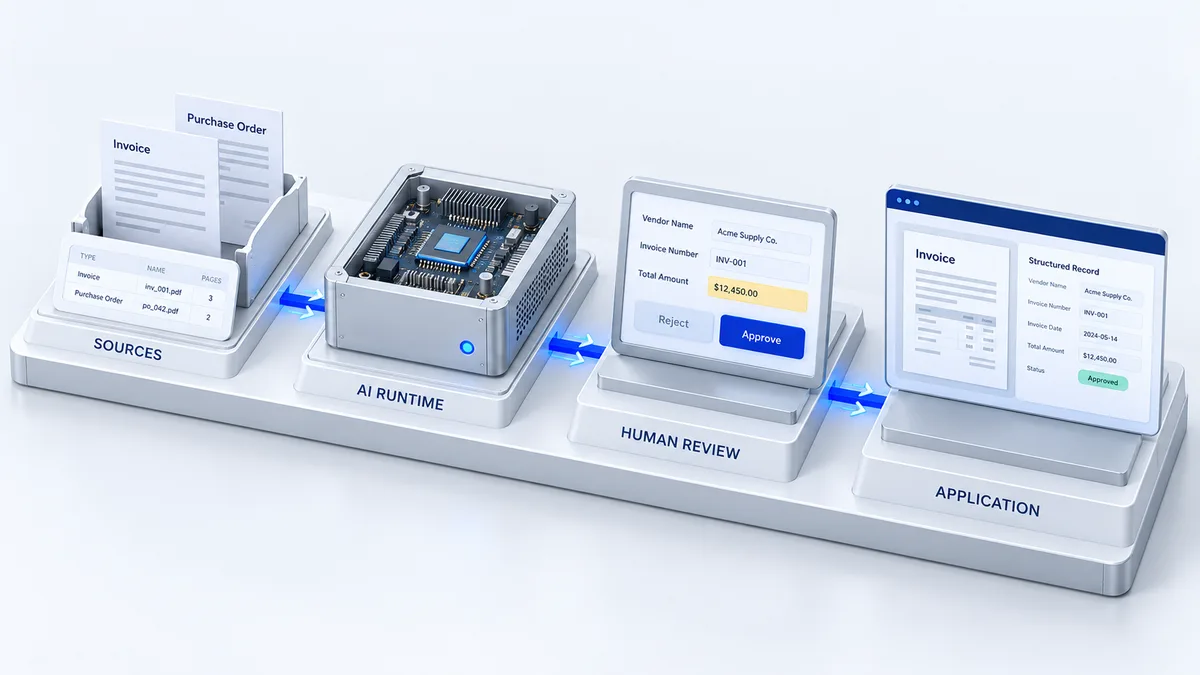
Good first candidates include classifying incoming documents, extracting fields for review, retrieving approved internal knowledge, drafting replies from known context, summarising cases, or preparing content variants for approval.
Avoid workflows where nobody owns the answer, source records are unreliable, consequences are high, or success cannot be checked. AI cannot repair an undefined process by itself.
Map the workflow and failure boundary
Document the trigger, approved inputs, transformation, output, reviewer, exception route, audit record, and final action. Decide which steps may be automatic and which require confirmation.
A useful design states what happens when confidence is low, a provider times out, a document is malformed, a paid generation has uncertain status, or sensitive information appears. Safe recovery is part of the product.
- What data enters the provider?
- Can staff verify the result from the original source?
- Which action needs explicit approval?
- How are prompts, models, outputs, cost, and exceptions recorded?
- Can the workflow continue manually when the provider fails?
Control data, access, and cost
Send only information needed for the task. Separate public, internal, confidential, and regulated data. Review provider retention, region, training controls, access logs, deletion, and contractual terms before production use.
Set budgets and rate limits before scale. Cache safe repeat results where appropriate, avoid blind retries for uncertain paid calls, and show users when a task is queued, failed, awaiting review, or complete.
Run a small proof with operational measures
Use a representative sample including normal cases, poor inputs, exceptions, and known failure examples. Compare the assisted workflow with the current baseline before expanding access.
A strong result might reduce handling time while preserving review quality, surface missing information earlier, or make work status visible. Record what was tested and what still needs production proof.
- Time per completed case
- Reviewer correction and rejection rate
- Completion and exception rate
- Provider cost per useful result
- Incidents, recoveries, and manual fallback use
APPLY THE GUIDE
Need help with ai automation?
Bring the current workflow, website, or unresolved decision. We will start with the smallest useful next step.
Discuss your projectKEEP READING
Related field guides.
AI ENGINEERING
How to evaluate an AI workflow before launch
Define useful outputs, test difficult inputs and separate AI suggestions from approved actions.3 min read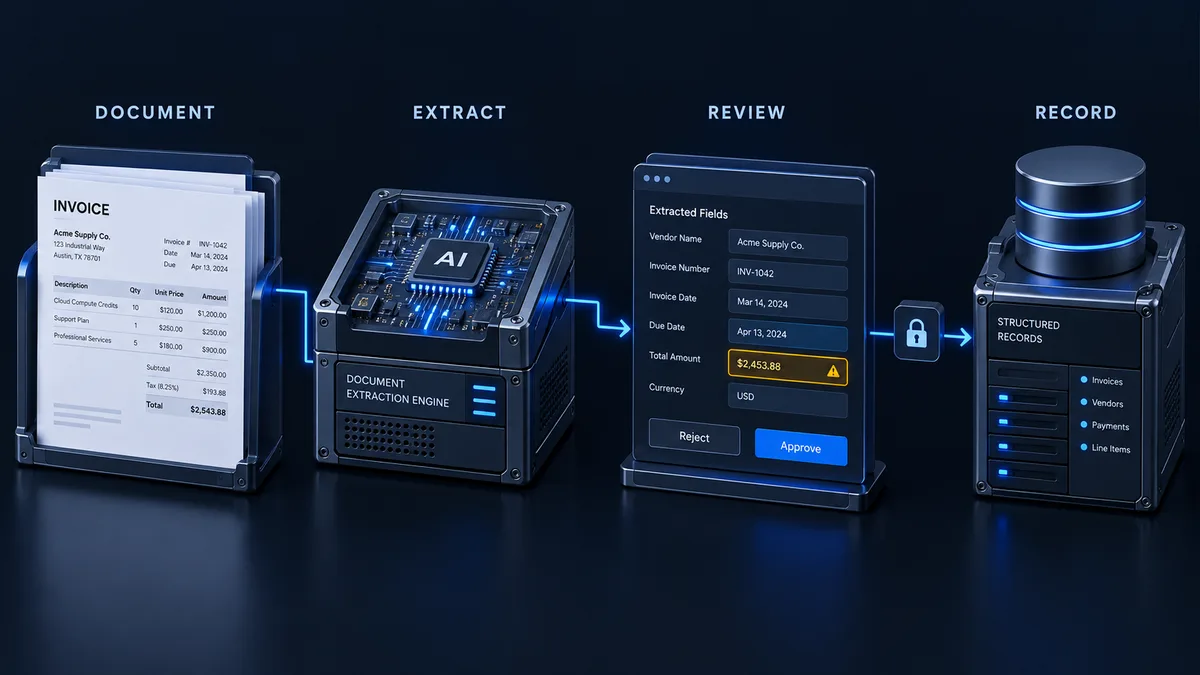
CONNECTED OPERATIONS